Learn · 7 min read
Honey at a Hungarian Christmas: honey wafers, poppy seed guba and gingerbread
In many parts of Hungary, Christmas used to begin with honey. According to ethnographic sources, the wafer (ostya) took pride of place at the Christmas Eve supper, in many places with honey; the meatless poppy seed dishes of the fast were sweetened with honey, and gingerbread went on the Christmas tree. We have gathered what the Hungarian Ethnographic Encyclopaedia (Magyar Néprajzi Lexikon) and ethnographic collections record about it.
Honey wafers to start the Christmas Eve supper
Roman Catholic families fasted all day on 24 December, and supper began after the evening church bells. According to the Hungarian Ethnographic Encyclopaedia, of all the dishes “the wafer took first place”, and in many places the supper opened with a honey wafer. It was most often eaten with honey, pepper and garlic. In Pereszlény, a village by the Ipoly river, 21 courses were put on the table, among them wafers, honey and mákos guba (a bread pudding with poppy seeds); in Vicsápapáti the head of the household carried in the honey, walnuts and apples in a sieve, with a wafer for every member of the family.
Around 1900 these foods – honey, garlic, apples, walnuts, often wafers – appeared together on the table mainly in the Upland (northern Hungary) and the southern Great Plain. In Calvinist (Reformed) villages the custom was not a fasting supper but rather beans, lentils or cabbage soup with sausage.
In many places the wafers were baked by the cantor-teacher (the village schoolmaster who also led the church singing), and the children carried them round to the houses. This wafer delivery is recorded as early as 1634 in Balog, in the old county of Gömör; wafers were baked at home longest in the Palóc region of northern Hungary, where they were called malomkalács or molnárkalács (“mill cake” or “miller’s cake”). Why honey? According to the ethnographic encyclopaedia, people believed that whoever ate it would be as happy as honey is sweet.
Poppy seeds and honey on the fasting table
Poppy seeds and honey are an old pairing for the fasting feasts. Relatives of mákos guba – dough dishes that are baked, then softened by pouring a liquid over them – had different names from region to region: guba on the Great Plain, kőtt mácsik in Transdanubia (western Hungary), lőnye in Csík, Háromszék and Moldavia, and elsewhere bobajka, pupácska or doboska. On the Christmas fast the Palóc people ate ferentő: rosettes of kalács (sweet yeast bread) soaked in water, with poppy seeds and honey.
Lőnye is also described in a cookbook from Kolozsvár (today Cluj-Napoca, Romania) dating from 1695, as dough soaked in honeyed water, with poppy seeds – in Székely Land (the Hungarian-speaking region of Transylvania) it is still made at Christmas. Around 1900 honey in the peasant kitchen was mainly a festive sweetener, used precisely on poppy seed dishes and boiled pasta. If you feel like trying it, here is our recipe for poppy seed guba with honey.
Gingerbread on the Christmas tree
The Christmas tree appeared in Hungarian aristocratic and middle-class homes in the first half of the 19th century, and in better-off peasant families in the second half of that century. According to the Hungarian Open Air Museum (Szabadtéri Néprajzi Múzeum, Szentendre), edible decorations dominated in peasant houses until the middle of the 20th century: gingerbread, wafers, szaloncukor (foil-wrapped Christmas tree sweets), meringues and home-made biscuits. The gingerbread shapes included the baby Jesus, Mary, the cradle, the heart, the star, the moon, the boot, the angel, the horse and the hussar – baked at home or bought at the fair.
Szaloncukor developed from fondant, which appeared in the early 19th century, and around 1900 it began to be made in factories. It did not push gingerbread off the tree but joined it there. You can read about the history of gingerbread in this article; for baking, here are our recipes for soft honey gingerbread, honey puszedli cookies and a gingerbread house.
Advent and New Year
According to the Hungarian Catholic Encyclopaedia (Magyar Katolikus Lexikon), there were places on the Great Plain where, during Advent, people ate honey when the bell rang for the Rorate, the dawn Mass, “so that the tongue would be sweet when it greets Mary”. Eating honey was also a custom at New Year: people believed it would bring good luck for the coming year.
The beekeepers’ Christmas
In some places a “honey harvest” was held on Christmas Day: the head of the household sent a taste of honey to his friends, who sent the plate back filled with wheat.
Beekeepers also linked many beliefs to Christmas. In Zala county it was said that if the beekeeper took a hazel stick to church on Christmas night and, back home, tapped the hive with it as many times as the number of swarms he wanted, he would get that many swarms. Elsewhere a few grains of the wheat taken to midnight Mass were placed in the hive entrance, or crumbs from the Christmas Eve supper were scattered among the bees.
How can the tradition live on today?
A few ideas if you would like to celebrate with honey this year:
- Start your Christmas Eve supper with a spoonful of honey or a honey wafer – mild Acacia honey suits it especially well.
- Bake a gingerbread house or honey puszedli cookies together, and hang gingerbread on the tree as people used to.
- Give honey as a present – you will find our gift ideas here.
- One important rule: babies under one year old must not be given honey in any form, not even spread on a wafer. Nébih, Hungary’s food chain safety authority, asks for this whatever the origin of the honey.
Our honeys mentioned here
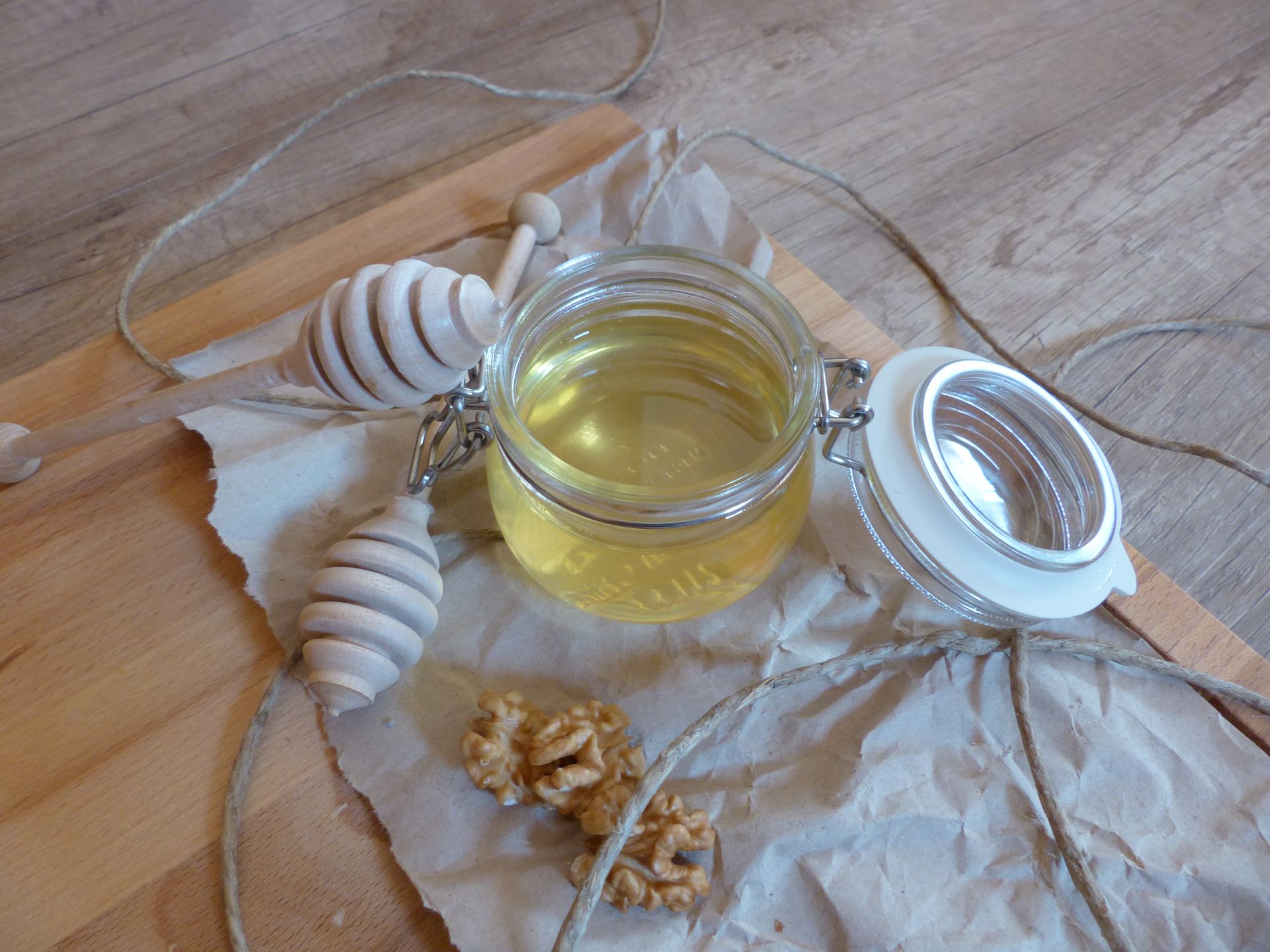 Acacia honey
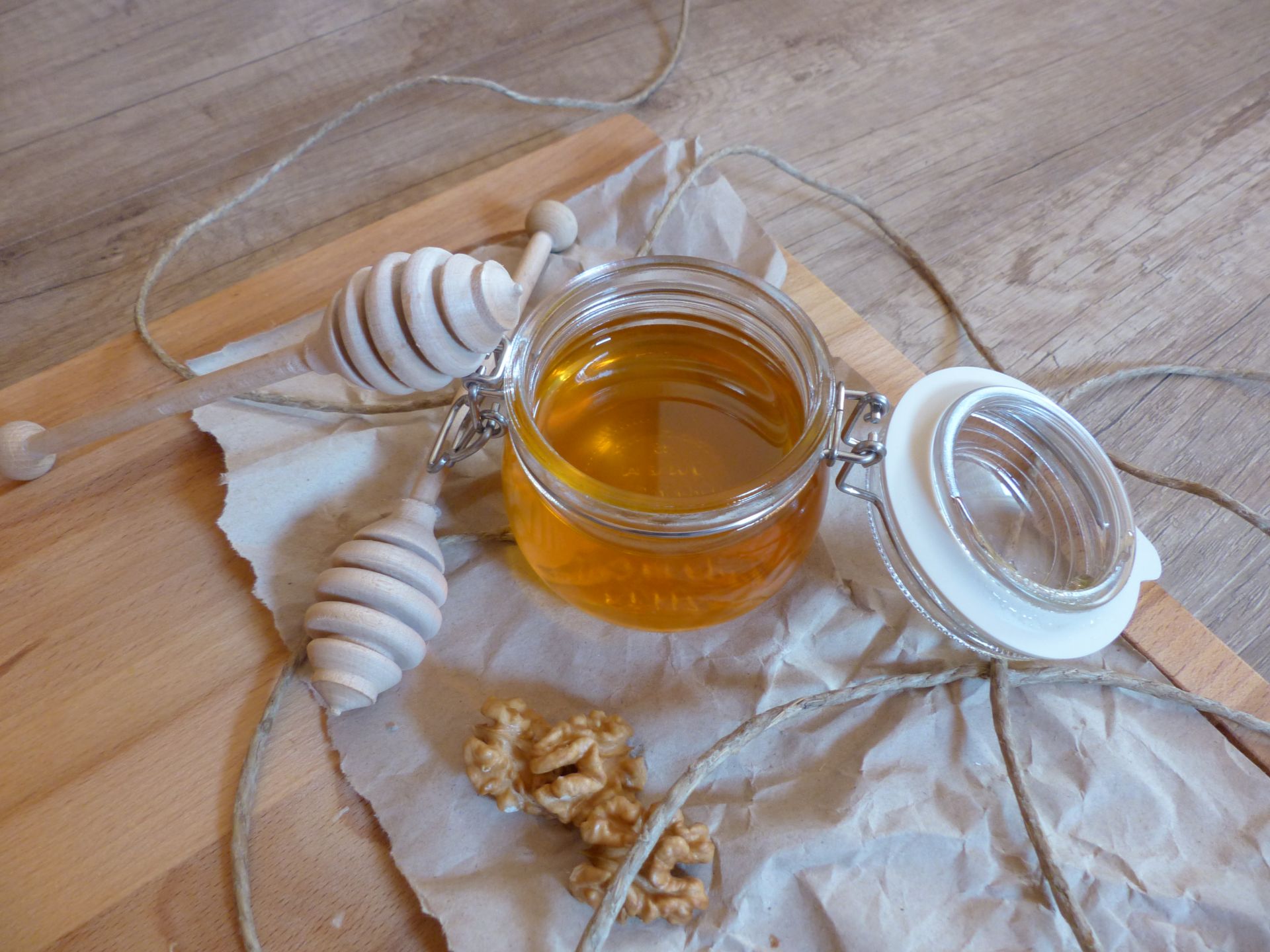 Wildflower honey
Recipes on the topic
Dessert30 min
Mákos guba with honey (Hungarian poppy seed bread pudding)
Crescent rolls softened in milk, sugared poppy seeds and a good drizzle of honey on top – an old, simple dessert of the Hungarian Christmas Eve table, ready in half an hour.
Recommended honey: Acacia honey
Baking45 min
Soft honey gingerbread, no resting needed
Spiced honey gingerbread that's soft straight away and doesn't need days to mature: you can bake and decorate it on the same day.
Recommended honey: Wildflower honey
Baking45 min
Honey puszedli (spiced honey biscuits)
Soft, spiced honey balls with a glossy icing – a classic of the Hungarian Christmas biscuit tin. One batch makes about 45.
Recommended honey: Wildflower honey
Baking2 hrs
Gingerbread house
A firm, easy-to-shape honey dough for a small house and about 20 figures – an Advent family activity you can keep as a decoration afterwards.
Recommended honey: Wildflower honey
Terms from the glossary
Sources
- Hungarian Ethnographic Encyclopaedia – Christmas (in Hungarian)
- Hungarian Ethnographic Encyclopaedia – Christmas Eve supper (in Hungarian)
- Hungarian Ethnographic Encyclopaedia – wafer (in Hungarian)
- Hungarian Ethnographic Encyclopaedia – Christmas tree (in Hungarian)
- Hungarian Ethnographic Encyclopaedia – honey (in Hungarian)
- Hungarian Ethnographic Encyclopaedia – beekeeping (in Hungarian)
- Hungarian Ethnography – the Christmas festive cycle (in Hungarian)
- Hungarian Ethnography – festive dishes (in Hungarian)
- Hungarian Ethnography – yeast doughs (guba, lőnye, ferentő) (in Hungarian)
- Hungarian Ethnography – beekeeping beliefs (in Hungarian)
- Hungarian Open Air Museum – Christmas tree decorations of the past (in Hungarian)
- Hungarian Catholic Encyclopaedia – honey (in Hungarian)
- Nébih – Never give honey to babies under one year old (in Hungarian)
Share it if you found it useful
Read on
3 min read
Why does honey crystallise, and what should you do about it?
If the honey in the jar has gone hard, it has not gone off: crystallisation is a natural process. Here is why it happens and how to make it runny again.
3 min read
Does honey go off? How to store it properly
Honey keeps for a very long time, but not for ever: moisture is its greatest enemy. Here is what to watch out for when storing it.
3 min read
How does nectar become honey? From flower to jar
For a kilo of honey, bees are estimated to visit millions of flowers. This is how nectar becomes ripe honey, and how it gets from the comb into the jar.