Learn · 5 min read
The hive’s other treasures: bee pollen, propolis, royal jelly and beeswax
Plenty more than honey is made in a hive. The bees collect or produce these materials for their own lives: pollen is their food, propolis seals the hive, royal jelly feeds the larvae and the queen, and the whole honeycomb is built from wax. The beekeeper takes only part of each – the rest stays with the colony.
Bee pollen: the bees’ source of protein
A forager bee sticks pollen together with a little nectar and carries it home in the “pollen baskets” on her hind legs, two tiny pellets per trip. The colour of the pellets depends on the flower: yellow is the most common, but there are orange, red, purple and green ones too.
The beekeeper collects it with a pollen trap: a grid placed at the hive entrance knocks some of the pellets off the legs of returning bees. The trap catches at most half of the pollen brought in. A colony is estimated to collect 15–50 kg of pollen a year, although estimates vary widely.
Fresh pollen is 20–30 per cent water, so it spoils quickly: it is either frozen or dried at no more than 42 °C. Store dried bee pollen in a well-sealed jar in a dry, cool, dark place. Many people sprinkle it on muesli or yoghurt; it’s not worth cooking with.
Propolis: the hive’s sealant
Bees make propolis by mixing wax with resin collected from tree buds – in Hungary mostly from poplars. They use it to seal gaps in the hive, narrow the entrance, and coat intruders that are too big to carry out, such as a dead mouse. Propolis is roughly half resin and a quarter wax, and its colour ranges from yellow to dark brown.
In the cold it is hard and brittle; in the warmth it is sticky. The beekeeper scrapes it off the frames or puts a propolis grid in the hive: the bees seal the gaps in the grid too, and once frozen, the propolis snaps off easily. A colony gives only 10–300 g a year, depending on the type of bee, the weather and the vegetation.
Propolis tincture is an alcohol extract of propolis, and honey with propolis offers it mixed into honey.
Royal jelly: the queen’s food
Royal jelly is produced by glands of young worker bees. Every larva gets some in its first days, but only the one that is fed on it all the way through becomes a queen – you can read more in our piece on the life of a honey bee colony. It is a whitish, slightly yellowish, creamy substance with a typical tangy taste, and about two-thirds of it is water.
The beekeeper collects it by placing young larvae in artificial queen cells. The bees stock these generously with royal jelly, which is taken out three days later. One cell holds only a few tenths of a gram, and a colony gives about half a kilo in a whole season – that’s why it is rare. Keep royal jelly in the fridge at 0–5 °C, and freeze it for longer storage.
Beeswax: what the comb is built from
Beeswax is produced mainly by worker bees aged 12–18 days, as tiny scales from four pairs of wax glands on the underside of the abdomen. A kilo of wax takes about a million scales and, by estimates, the energy of 6–8 kg of honey. In return, the comb is extremely strong: 20 g of comb can hold a kilo of honey.
From a frame hive, the beekeeper gets wax equal to only 1–2 per cent of the honey harvest; the finest part is the wax cappings cut off at extraction. Wax melts at around 62–64 °C. Beekeepers recycle it: it is pressed into comb foundation, on which the bees build new comb, and it is also used for beeswax candles. As a food additive it is called E 901 and is used as a glazing agent.
What you should know about allergies
Bee pollen and royal jelly can cause allergic reactions, occasionally severe ones, especially in people with asthma or allergies – in Australia and New Zealand this has to be stated on the label. So we don’t recommend them to people with a pollen allergy, and if you’re trying them for the first time, start with a small amount. Propolis is a known contact allergen: in sensitive people it can cause skin reactions.
Our honeys mentioned here
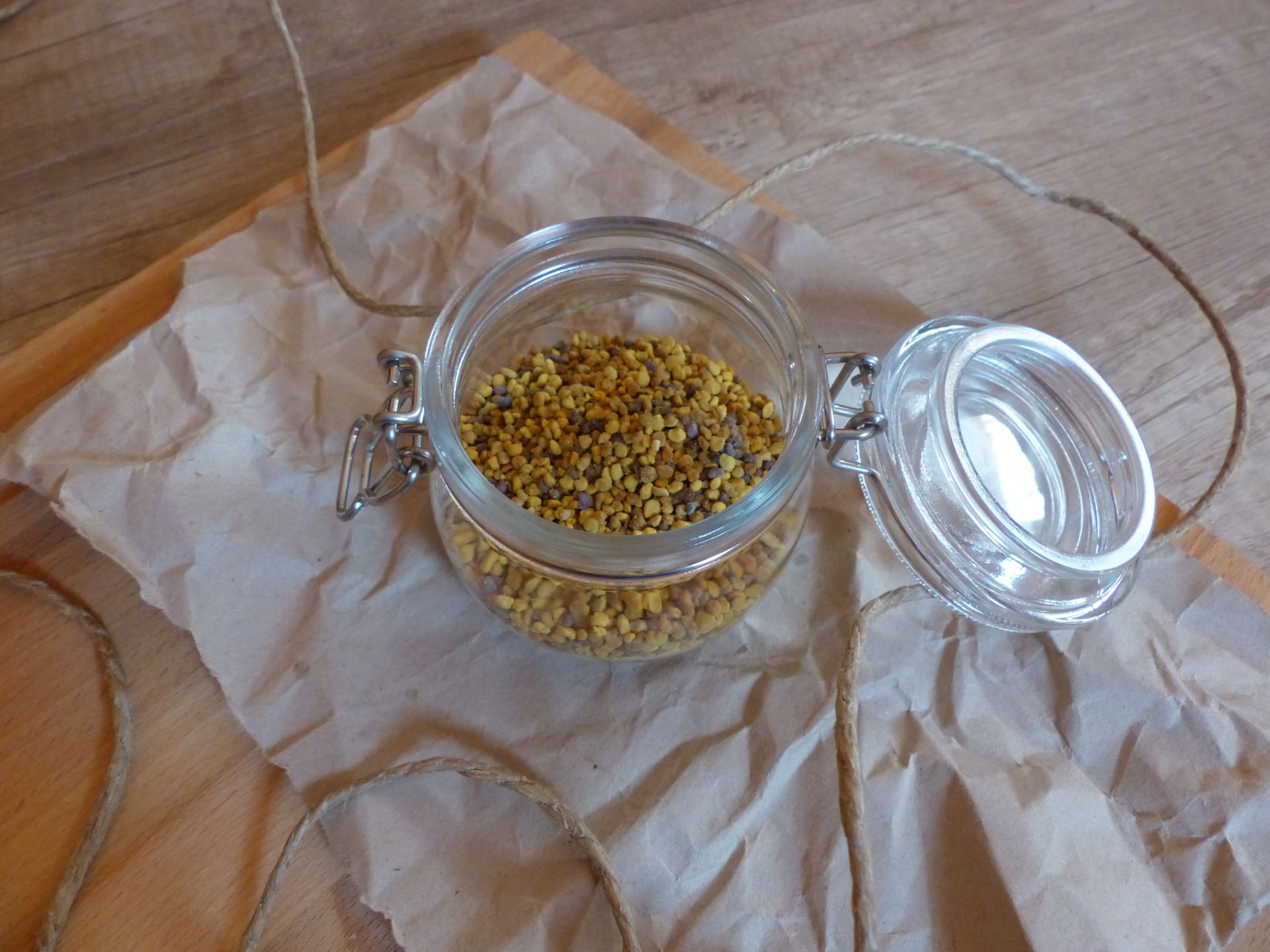 Bee pollen
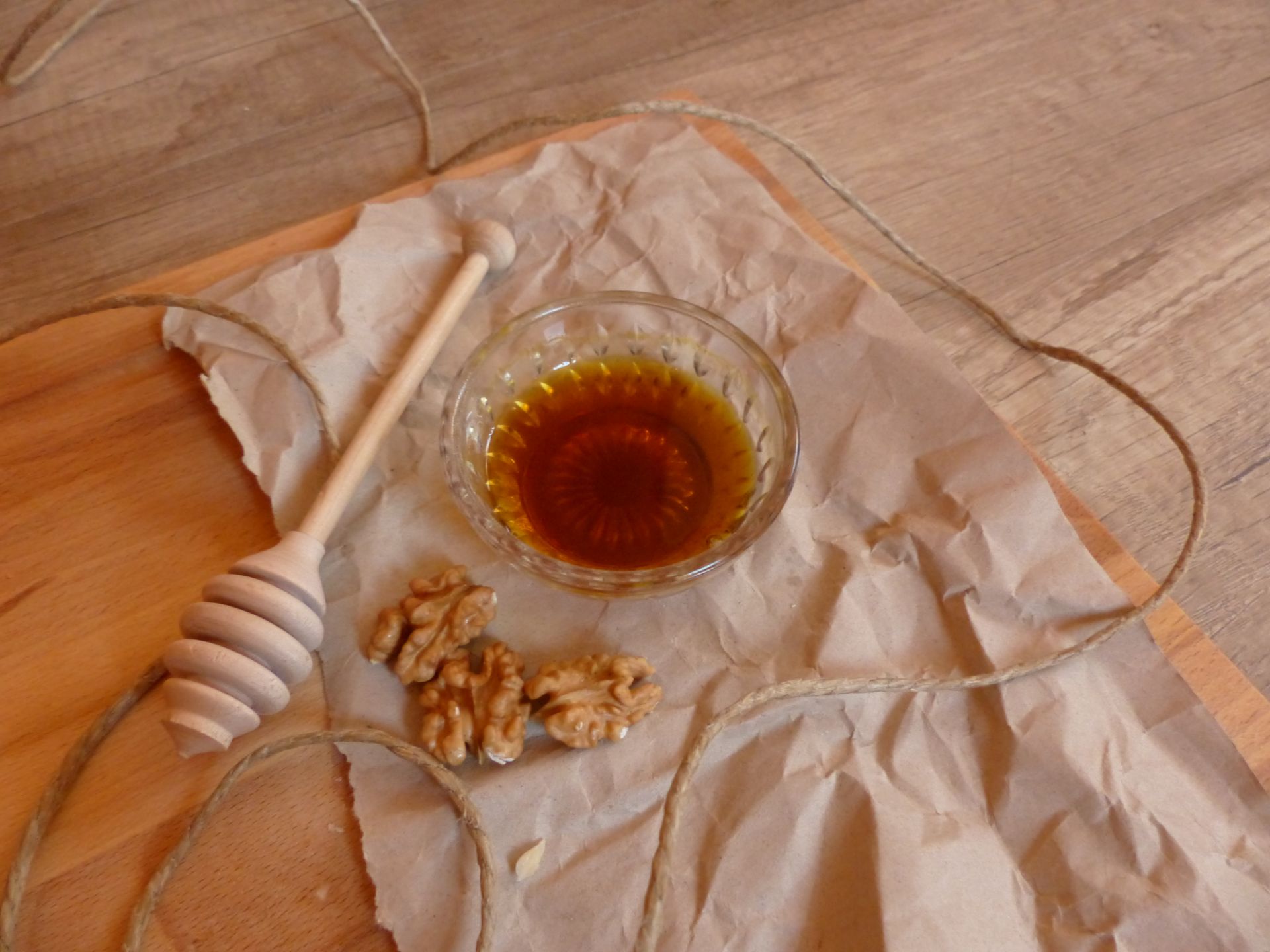 Propolis tincture
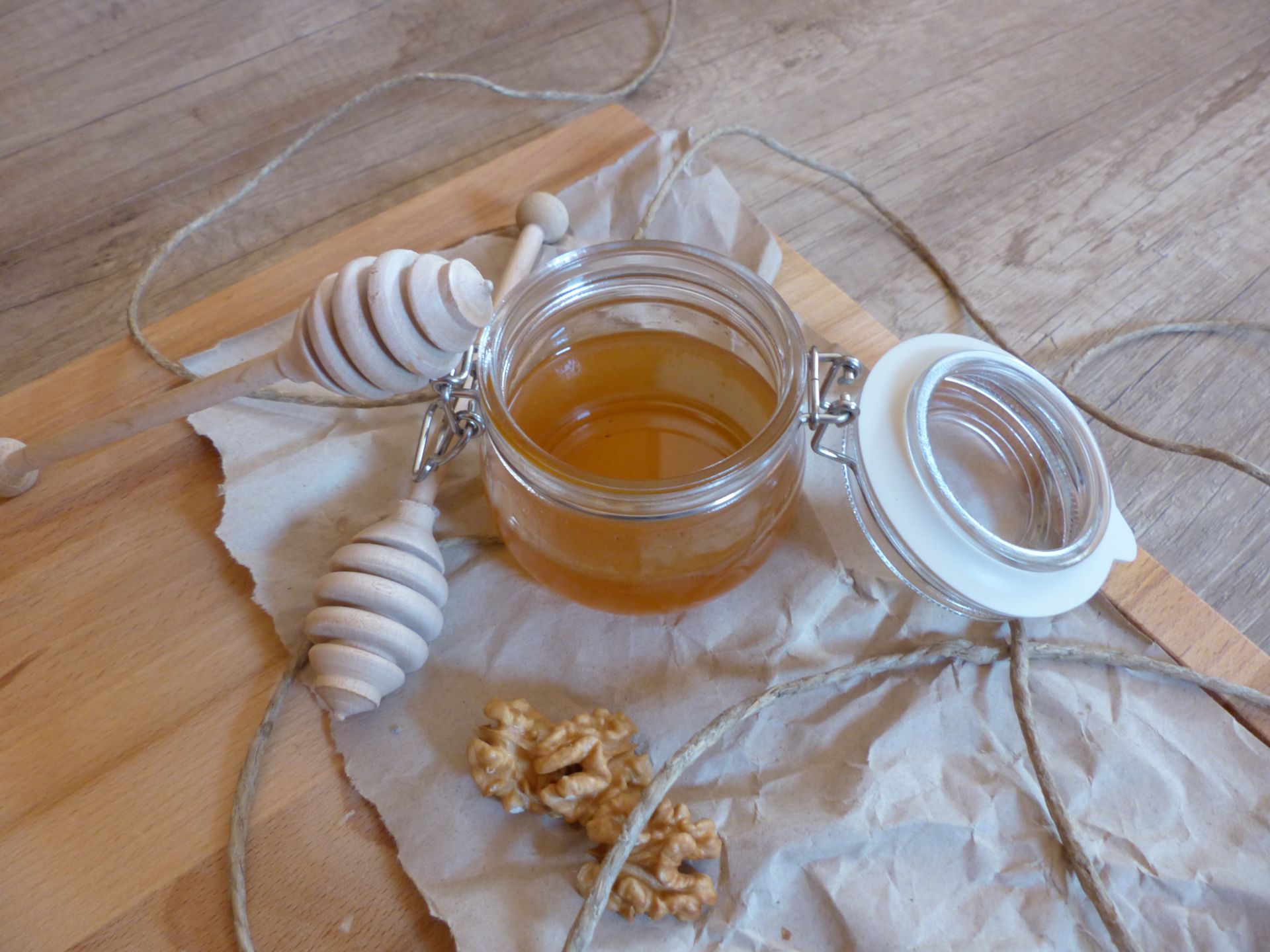 Honey with propolis
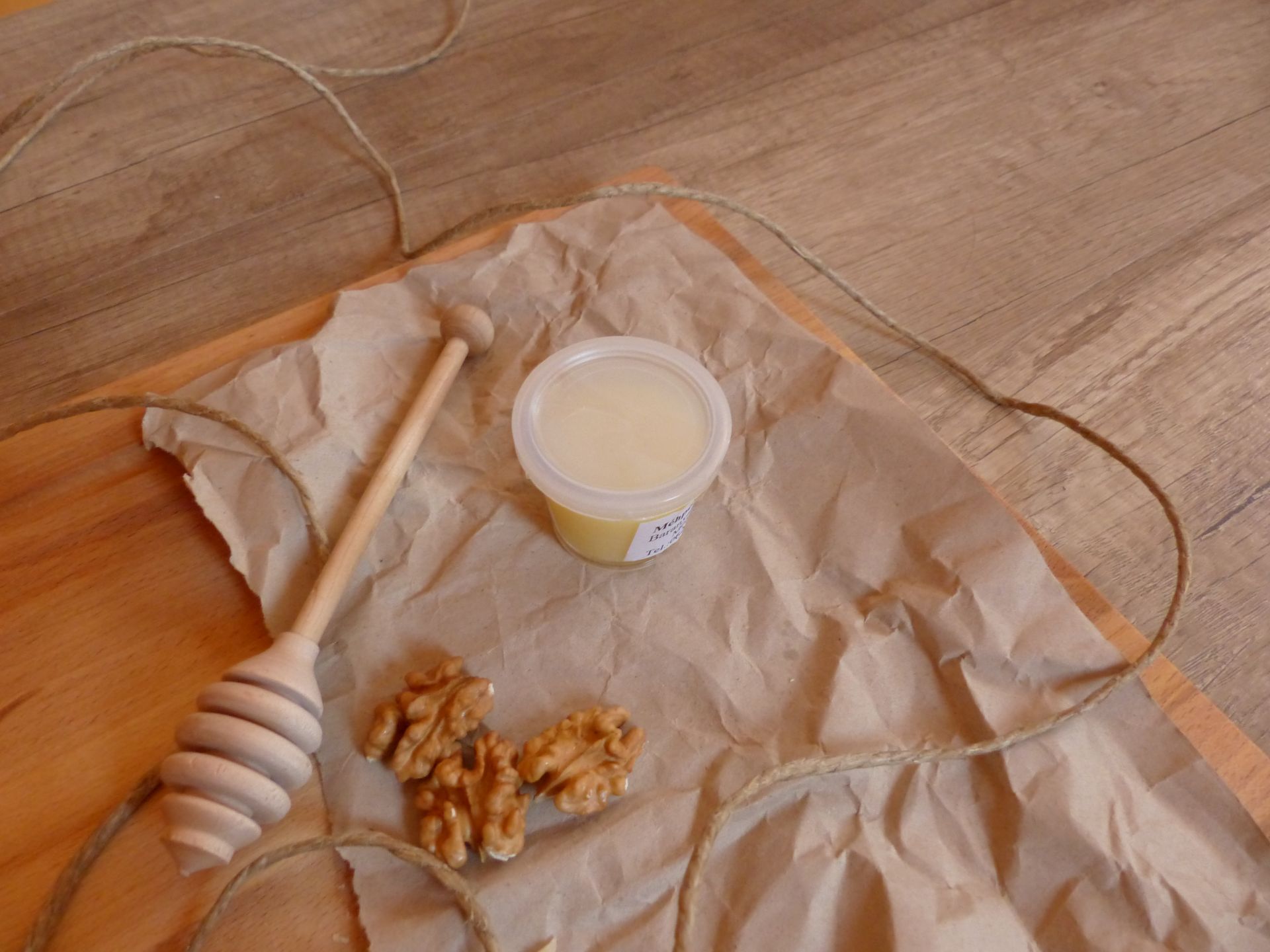 Royal jelly
Terms from the glossary
Sources
- FAO (Krell, 1996) – pollen
- FAO (Krell, 1996) – propolis
- FAO (Krell, 1996) – royal jelly
- FAO (Krell, 1996) – beeswax
- FAO (2009) – Bees and their role in forest livelihoods
- Campos et al., Journal of Apicultural Research (2008) – pollen quality
- INSIGNIA – how much pollen a colony collects
- FSANZ – mandatory warnings (bee pollen, propolis, royal jelly)
- DermNet – contact allergy to propolis
- EFSA – evaluation of beeswax (E 901)
Share it if you found it useful
Read on
7 min read
Honey at a Hungarian Christmas: honey wafers, poppy seed guba and gingerbread
Honey wafers on Christmas Eve, poppy seeds and honey on the fasting table, gingerbread on the tree: honey was once one of the main flavours of a Hungarian Christmas. This is how the tradition lived – and how it can live on today.
3 min read
Why does honey crystallise, and what should you do about it?
If the honey in the jar has gone hard, it has not gone off: crystallisation is a natural process. Here is why it happens and how to make it runny again.
3 min read
Does honey go off? How to store it properly
Honey keeps for a very long time, but not for ever: moisture is its greatest enemy. Here is what to watch out for when storing it.