Learn · 4 min read
Gifts from beeswax: homemade candles and beeswax wraps
Bees build their comb from beeswax, and the beekeeper gets it mainly from the cappings cut off during extraction. It has a pleasant, faintly honeyed scent, and you can make two simple, lovely gifts from it at home. Where the wax comes from and what the bees use it for, you can read in our piece on the hive’s other treasures.
What wax should you use?
Look for pure beeswax from a beekeeper or a beekeeping supplier – as a block, pellets or grated. You can grate a block on a kitchen grater so it melts faster and more evenly. Beeswax melts at around 62–64 °C.
Safety first
Hot wax can burn you, and overheated wax can catch fire. So:
- Always melt it in a water bath: in a metal bowl set over a pan of hot water, or in an old pan kept for the purpose. Never put it straight over the flame.
- Don’t leave it unattended, and keep children away from the hot part.
- If the wax starts to smoke, take it off the heat at once. Never put out burning wax with water – cover it with a lid.
- Keep the bowl and brush for this job only afterwards: wax is hard to get off them.
A beeswax candle in a glass
For two small glass candles you’ll need about 200 g of wax and a thicker cotton wick, because beeswax burns more slowly than paraffin:
- Stick the base of the wick to the bottom of the glass with a drop of melted wax, and hold the top in the centre with a skewer laid across the rim.
- Melt the wax in a water bath and pour it slowly, in a thin stream, into the glass.
- As it cools, the wax may sink around the wick: top it up with a little melted wax.
- Leave it for a day, then trim the wick to about 5 mm.
- Never leave a burning candle unattended.
Beeswax wraps
A beeswax wrap is a thin piece of 100% cotton soaked in beeswax. The warmth of your hands makes it mouldable, so you can stretch it over a bowl or wrap half a lemon, a piece of cheese or a slice of bread in it. Cut the fabric to size with pinking shears so the edges don’t fray.
It’ll be more flexible if you mix the wax with an equal amount of jojoba oil, and stickier with a little food-grade pine resin. Brush the melted mixture onto the fabric laid on baking paper, let the excess drip off and leave it to cool. The oven method is even easier: lay the fabric on a tray lined with baking paper, sprinkle it with grated wax, melt it on the lowest oven setting, then spread it evenly with a brush.
Don’t use it for raw meat or hot food: the heat melts the wax. Wash it in cold water with a little mild washing-up liquid and let it air-dry. With care it lasts about a year, and then you can re-wax it.
As a gift
A glass candle or a few beeswax wraps together with a jar of honey make a personal, handmade present. If you need something to go with it, have a look at our gift ideas, or make some homemade szaloncukor.
Our honeys mentioned here
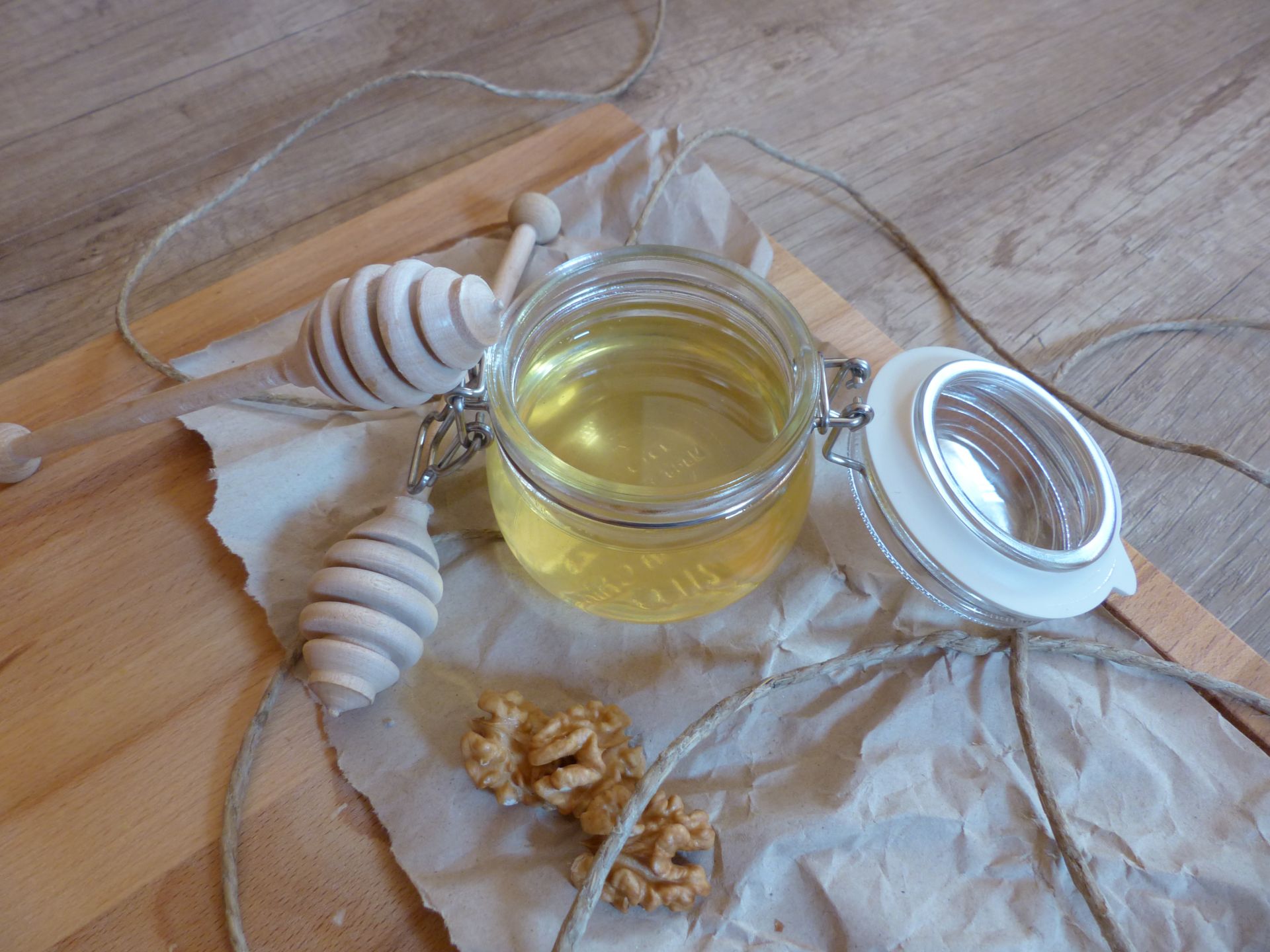 Acacia honey
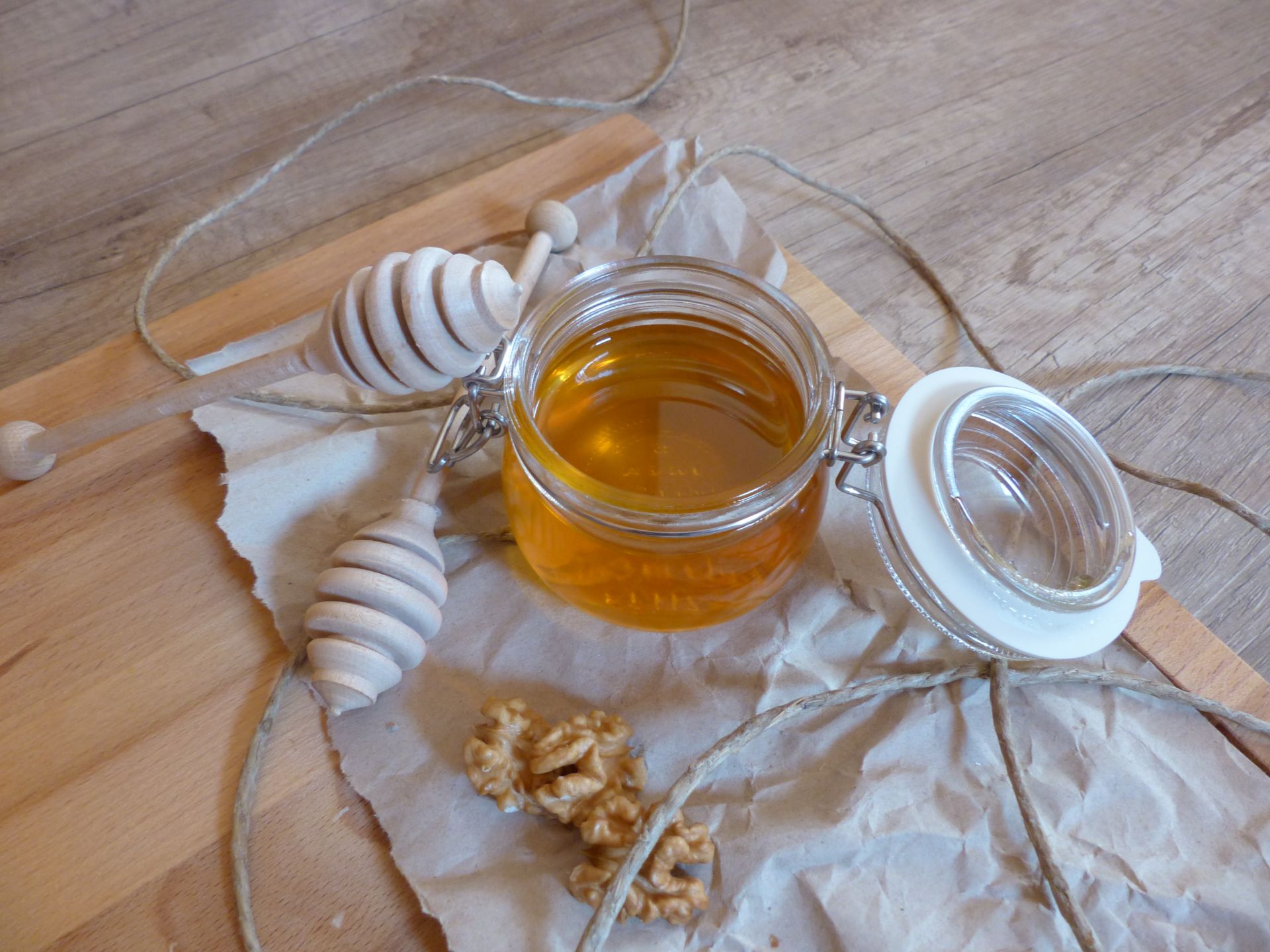 Wildflower honey
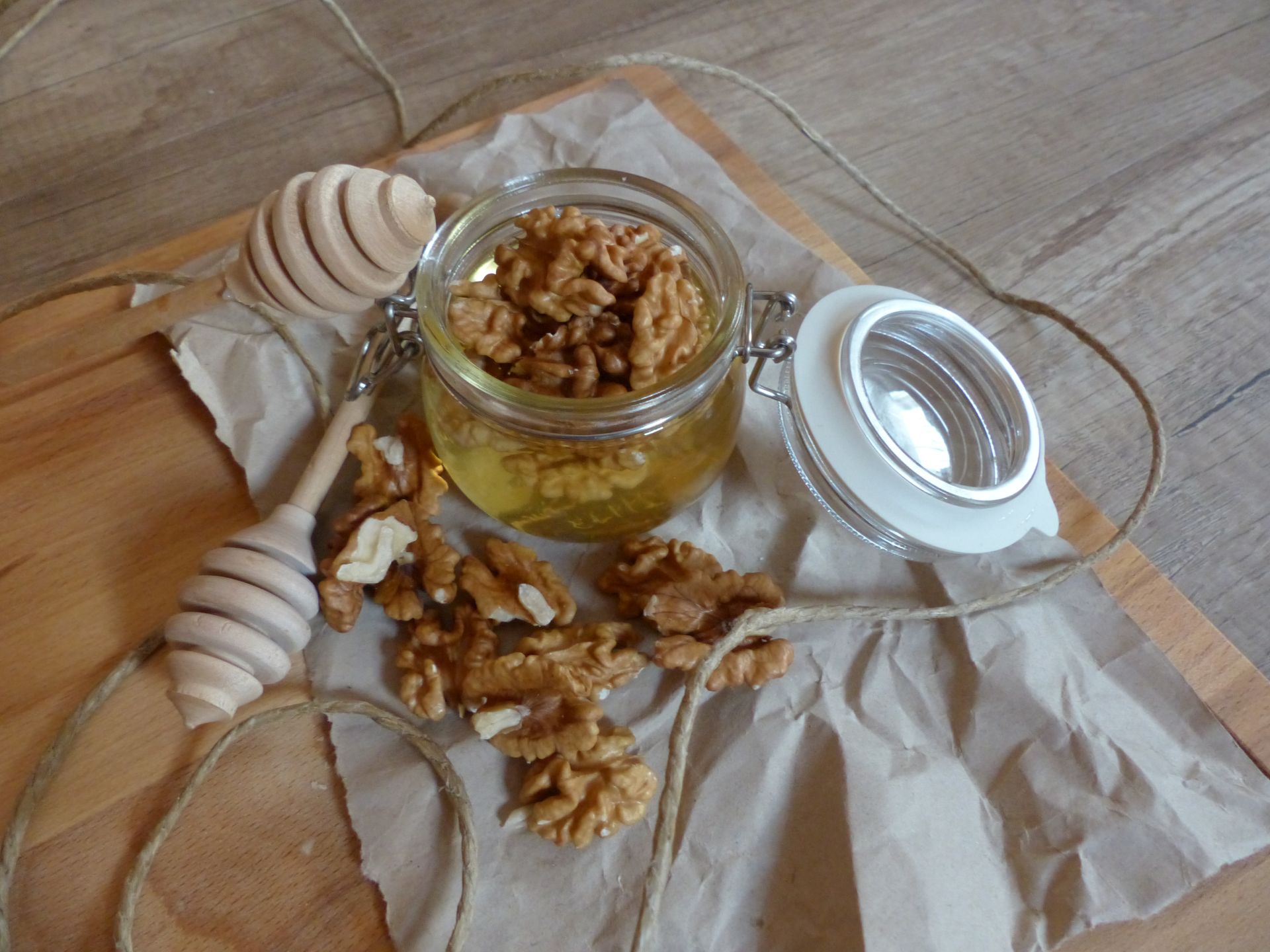 Honey with walnuts
Recipes on the topic
Terms from the glossary
Sources
Share it if you found it useful
Read on
7 min read
Honey at a Hungarian Christmas: honey wafers, poppy seed guba and gingerbread
Honey wafers on Christmas Eve, poppy seeds and honey on the fasting table, gingerbread on the tree: honey was once one of the main flavours of a Hungarian Christmas. This is how the tradition lived – and how it can live on today.
3 min read
Why does honey crystallise, and what should you do about it?
If the honey in the jar has gone hard, it has not gone off: crystallisation is a natural process. Here is why it happens and how to make it runny again.
3 min read
Does honey go off? How to store it properly
Honey keeps for a very long time, but not for ever: moisture is its greatest enemy. Here is what to watch out for when storing it.